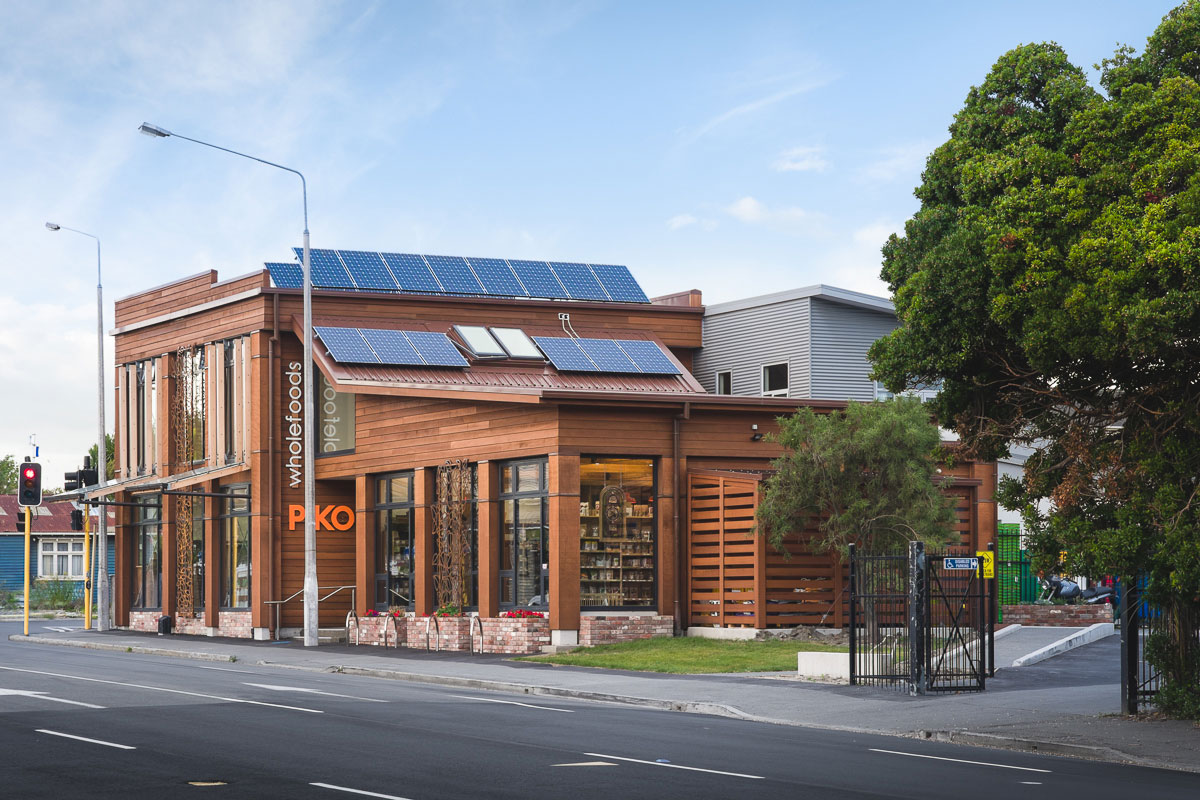
Set within Christchurch’s central city, this environmentally focused building re-establishes PIKO Wholefoods through light, warmth, and passive solar design.
PIKO Wholefoods new store was specially designed as an environmentally friendly building and has certainly managed to help successfully re-establish the business in the Central City. Following the devastating Christchurch earthquakes which saw the original building reduced to rubble in parts, PIKO decided to rebuild on the existing site.
That PIKO
would create an environment friendly building, perhaps goes without saying, but
still meant that practicalities and, not in the least, budgets had to be
carefully considered. The result is a practical application of many
eco-principles and a few lessons learned along the way.
The initial
design approach taken by Architects Solarchitect was to produce a commercial
building based on ‘Passive Solar’ design principles.
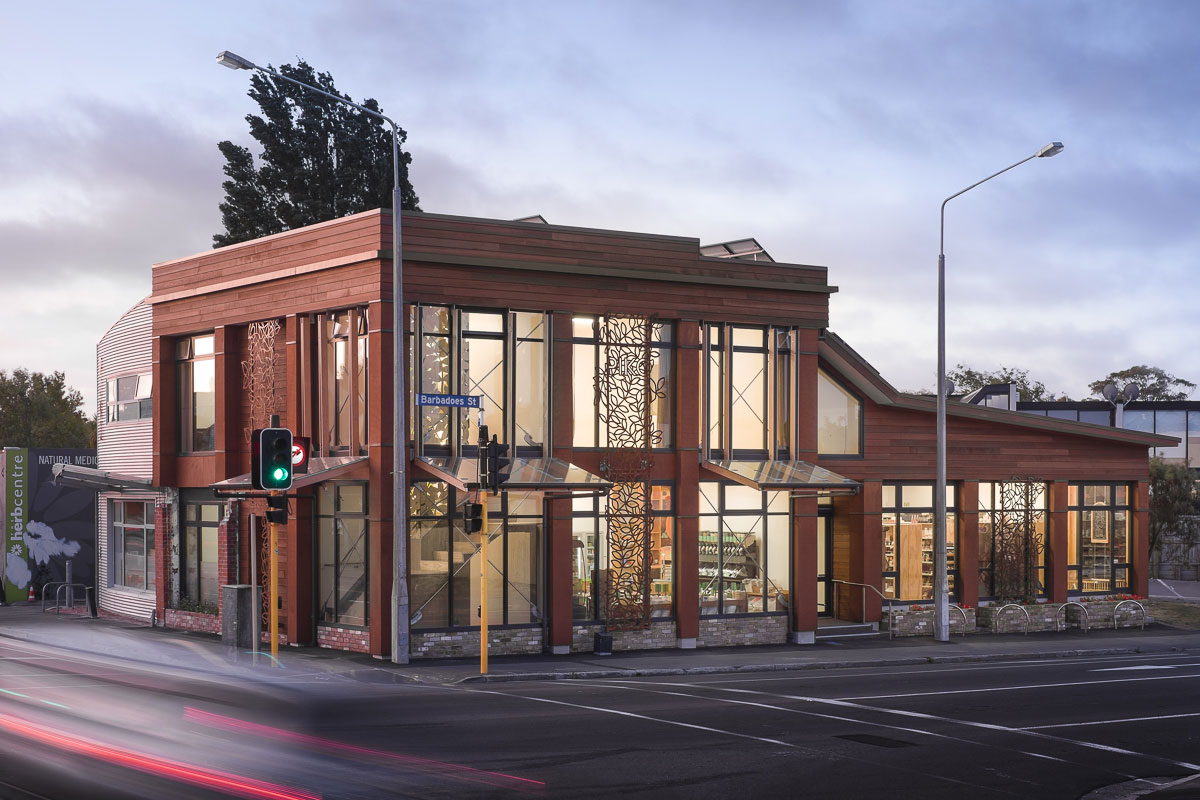
This saw
the building reoriented 180 degrees to open it up to the sun and to
significantly improve Customer access on a difficult corner for traffic and
access in general. The original dark interior has become filled with natural
light and sun and has a vibrant atmosphere.
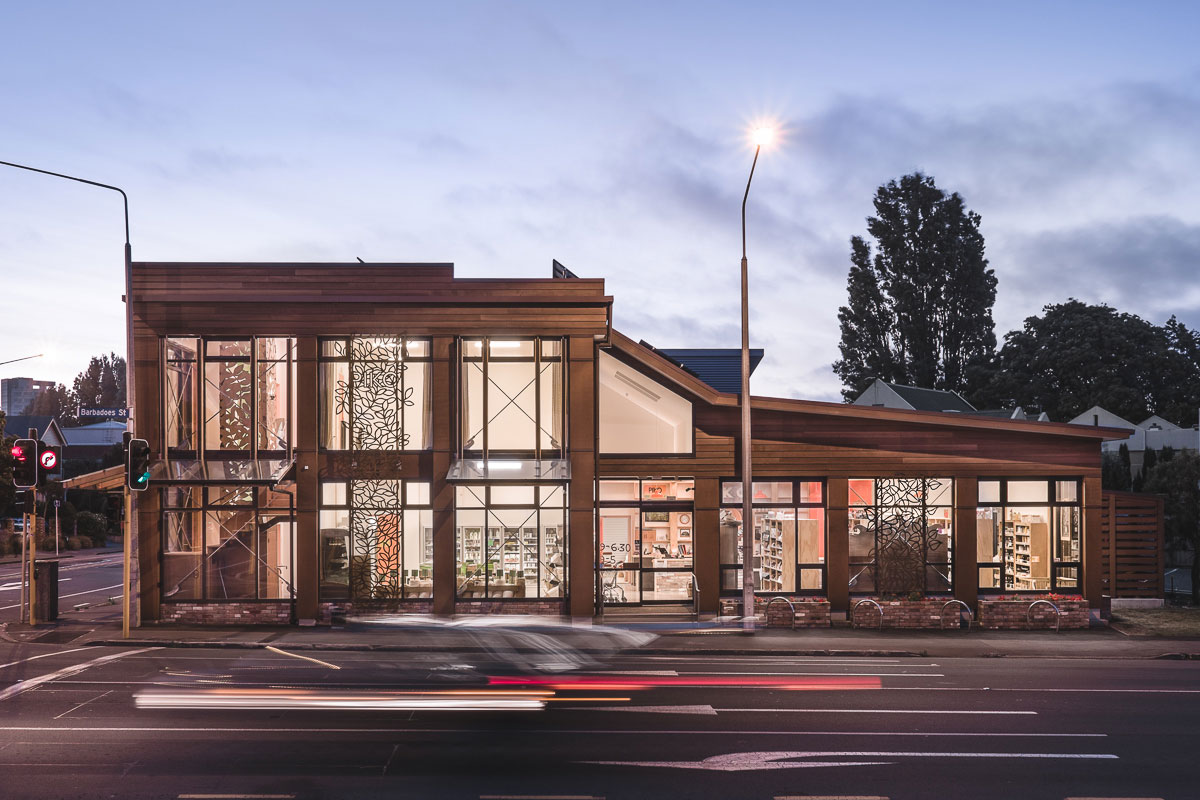
Glass
facades to the street were a planning requirement and, facing East, did cause
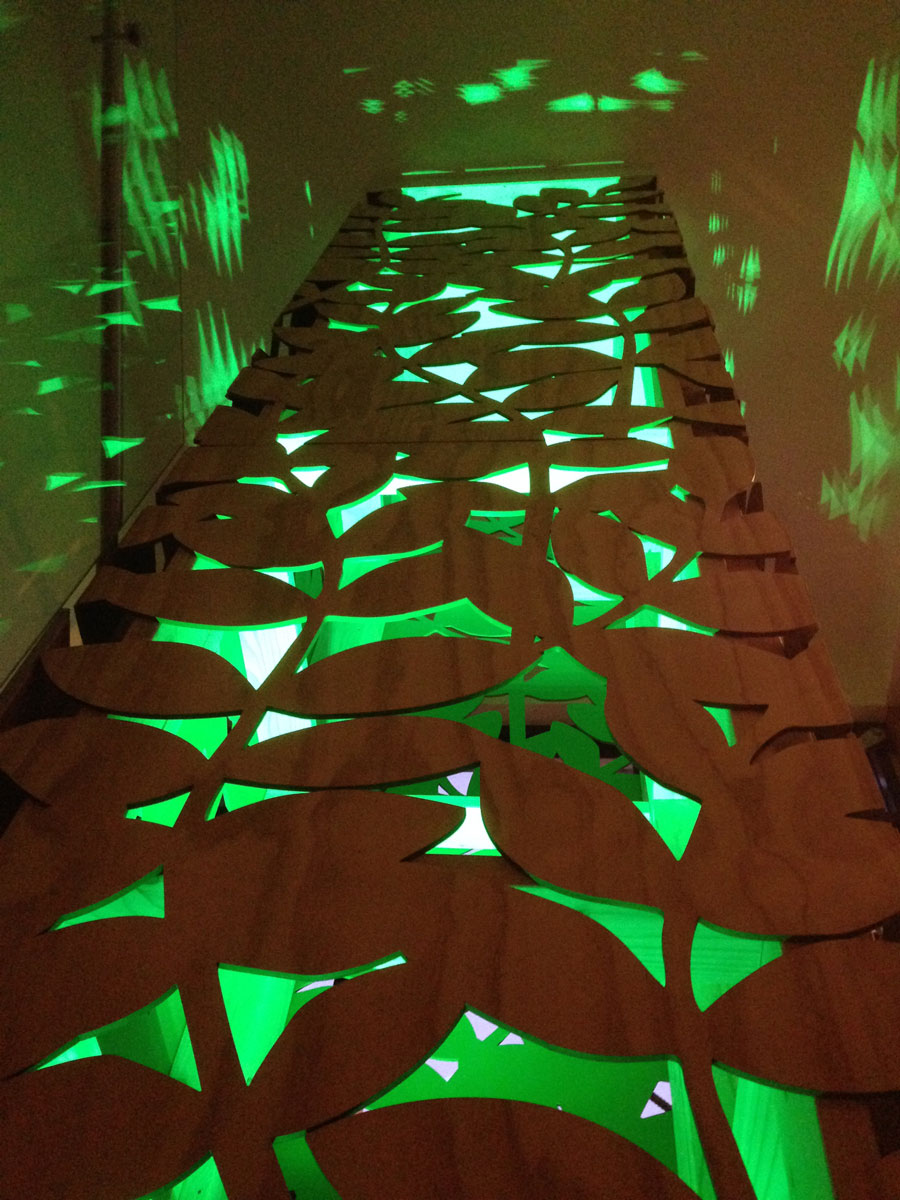
concern in the design stage. Attractive shading screens were designed, however
it was desirable to retain natural light and visibility. Further sun control
has been added which also protects some of the store stock when required.
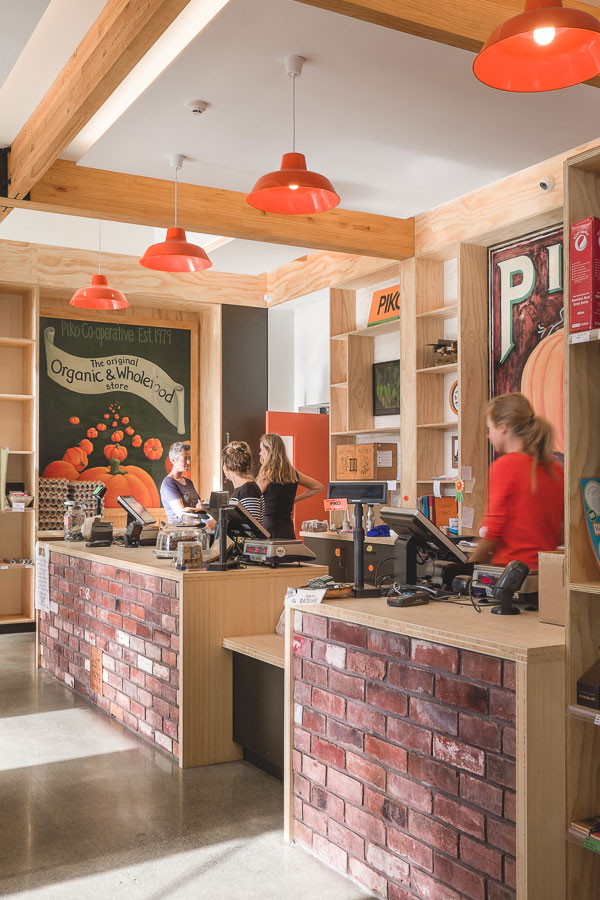
The
relatively light weight structure assisted with building costs and the
laminated timber grid form was conceived by the Architect to provide a natural,
timber feel for the interior. Combined with an innovative LED lighting design
the interior won a NZ Timber Design Award commendation.
The Passive
Solar approach taken by Solarchitect addresses both the form and functional
aspects of design. The atrium-style entryway to the store provides ventilation
with its height and natural light. The building newly oriented to the North
utilizes its roof forms to support solar panels and energy production. The
building produces about one third of the energy it requires with this solar
array. In energy use, the building cost a similar amount to run as it did in
its original form, nearly ten years later and now at three times the size.!

great to see a Christchurch gem of a store up, running and doing really well..!